Skip to content
Bill Saver Solar — Solar & Battery Systems for Farms and Agricultural Businesses

Solar for Working Land

Solar & Battery Systems for Farms and Agricultural Businesses

Reliable, accredited solar installation built for the energy demands of modern farming.

Farms run on steady power: pumps, sheds, cool stores and overnight equipment demand more than most households. Rising electricity costs eat into your margin, and grid outages can stop work mid-cycle. A well-sized solar system with battery storage gives you control—cut peak bills, run during blackouts and qualify for government incentives. We design and install systems matched to your actual load, using SAA-accredited electricians and tier-one equipment.

What matters for this sector

Cut your power bill year-round

Solar offsets your peak daytime usage; a battery covers early morning and evening shifts. Most farms see 50–80% savings on summer bills and 20–40% on winter bills once the system is sized to your actual load.

Run equipment during blackouts

Battery storage keeps your pump, cool store and essential shed equipment running when the grid goes down. Critical on farms where downtime costs lost stock or delayed harvest.

Qualify for rebates and certificates

Small-scale Technology Certificates (STCs) and state agricultural rebates can cut your upfront cost by 20–35%. Confirm current amounts with the Clean Energy Regulator or your state energy agency.

Future-proof with EV charging

Add an EV charger to your solar system and charge farm vehicles during peak generation. Especially cost-effective if you run fleet vehicles, utes or future tractors.

Process

  1. 01

    Site assessment and load audit

    We visit your farm, measure roof area and pitch, check switchboard capacity and power phase, review 12 months of power bills, and identify peak usage times. This takes 30–45 minutes and is free. We also discuss backup power needs, equipment priority during outages, and available space for ground or barn-mounted panels.

  2. 02

    System design and quote

    Our engineers model your consumption against seasonal generation, choose tier-one panels and inverter, confirm STC eligibility and current rebate amounts, and provide a detailed quote. System size typically ranges from 5–40 kW for farms; we show payback period and 25-year lifetime savings. We also outline how to claim STCs and any state rebates.

  3. 03

    Installation and grid connection

    An SAA-accredited electrician installs panels, racking, inverter, isolators and safety switches; we handle all switchboard work and grid connection paperwork. Installation takes 1–3 days depending on system size and roof complexity. We then set up your monitoring app, walk you through operation, and arrange final inspection by your distribution network operator before you begin generating.

Questions

Common questions

Still have questions? Ask us or call 0485868633.

How big a system does a farms & agriculture need?
It depends on daytime load and roof area. Interval data from your retailer gives the most accurate answer.
How long does a home solar installation take?
Most residential systems are installed in one day. Approval and grid-connection paperwork can add one to four weeks before the system is switched on.
What size solar system do I need?
Size the system to your daytime use and future plans. A typical family home suits a system that covers most of its annual usage; check your bill for daily kWh and multiply by 365.
How much does a solar system cost for a farm?
Farm solar systems start at $4,000–$9,500 for a small rooftop installation and scale to $25,000–$160,000 for commercial setups that cover larger roof or ground area. Cost depends on system size (kilowatts), panel and inverter brand, roof type and pitch, switchboard condition, and whether you need single or three-phase power. Most farms qualify for Small-scale Technology Certificates (STCs) under the federal SRES, which reduce upfront cost. A site assessment reveals your actual usage pattern and roof capacity; we then quote a system sized to offset your peak demand periods. Confirm current STC rebates with the Clean Energy Regulator.
Can I add a battery to my existing farm solar?
Yes. Adding a battery to existing solar costs $7,500–$16,000, depending on capacity (kWh) and battery chemistry. Your existing inverter must support battery coupling; we check this during assessment. A battery lets you store excess daytime generation for evening or early-morning use, especially valuable on farms where equipment runs at dawn or dusk. If your inverter is incompatible, we can replace it (typically $1,500–$4,200). If you're considering the Cheaper Home Batteries Program (from 1 May 2026), rebate rates are $252/kWh for the first 14 kWh, $151/kWh for 14–28 kWh, and $38/kWh for 28–50 kWh. Confirm current eligibility and timing with your state energy agency.
Do farms qualify for solar rebates?
Yes, under two main federal schemes. Small-scale Technology Certificates (STCs) apply to systems up to 100 kW; your installer deposits STCs in your account as an upfront discount on installation cost. The STC value is kW × zone multiplier × 5-year deeming period × $38 per certificate; the Clean Energy Regulator sets zone multipliers by postcode. Second, the Cheaper Home Batteries Program (from 1 May 2026) rebates battery costs at $252/kWh for the first 14 kWh, $151/kWh to 28 kWh, and $38/kWh to 50 kWh. Some states also run additional agricultural rebates; contact your local energy agency for current details. Always confirm amounts with the Clean Energy Regulator before committing, as incentive dates and figures change annually.
What size solar system does a farm need?
Farm size depends on your equipment, usage pattern and duty cycle. A small farm with a shed, water pump and basic lighting might use 5–10 kW; a larger operation with cool storage, workshop equipment and multiple buildings could need 15–40 kW or more. We assess your power bills, identify peak load times, measure roof area and pitch, check switchboard capacity, and model your annual generation against your consumption. Many farms benefit from a system sized to peak daytime load rather than full annual consumption, paired with a battery to bridge evening and early-morning runs. Ground-mounted systems are also an option on farms with available space. A full site assessment is free and takes 30–45 minutes.
Will solar work if my farm is off-grid or remote?
Yes. Off-grid solar systems are common on remote farms and cost $25,000–$75,000 depending on system size, battery capacity and location. An off-grid setup includes solar panels, a battery bank, an inverter-charger, a backup generator (often diesel), and a control system to balance load and generation. Design is critical: we size the battery to cover your longest low-generation season (winter, cloudy weeks) and model fuel costs if a generator tops up supply. Remote locations may have higher freight and labour costs; we quote after a detailed site visit and load audit. Off-grid systems can also run combined with mains power on the boundary.
Can I use solar to charge an EV on my farm?
Yes. EV charger installation costs $1,200–$3,200 depending on charger type (AC or DC) and electrical distance from your switchboard. We often pair EV charging with a solar + battery system so you charge during peak generation (midday) or from stored battery overnight. A 6.6 kW solar system generates enough to charge most farm vehicles during daylight; a battery adds flexibility. We check your available power (single or three-phase) and switchboard headroom before quoting. If your farm has multiple vehicles or heavy duty cycles, a larger system or commercial three-phase setup may be cost-effective.
How often do solar panels need cleaning on a farm?
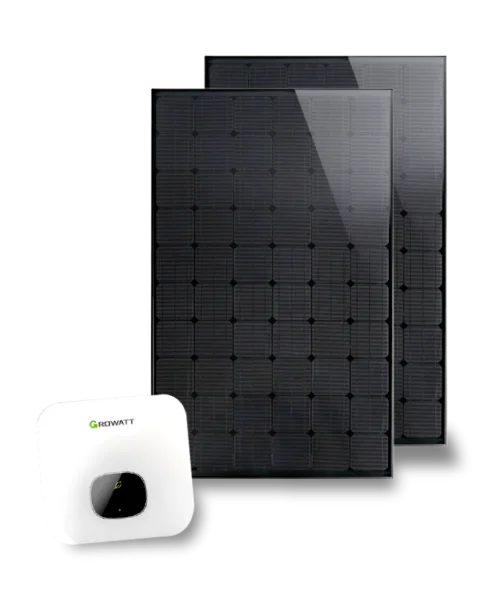
Panels accumulate dust, pollen, bird droppings and hay residue faster on farms than suburban sites. Most farms benefit from cleaning every 3–6 months, particularly after harvest or windy seasons. Solar panel cleaning costs $150–$450 per visit depending on roof access, system size and panel count. Dirty panels lose 15–25% of output, so regular cleaning protects your investment. We recommend a maintenance plan that includes visual inspection, cleaning and inverter health checks. Wet-season farms in high-humidity areas (coastal Queensland, northern NSW, WA) may need more frequent cleans due to algae growth.
solar — final

Get Your Farm Solar Quote

Get my free quotes →

Free site assessment. No obligation. Accredited installer, end-to-end support.

Services for business

Solar Battery InstallationSolar + Battery PackagesAdd a Battery to Existing SolarCommercial Solar

Other industries

Warehouses & ManufacturingRetail & HospitalitySchools & ChildcareMedical & Dental ClinicsStrata & Apartment Buildings

Costs & finance

Solar & Battery RebatesSolar Finance & Repayment Calculator

Call Get a free quote →
Tap to call