
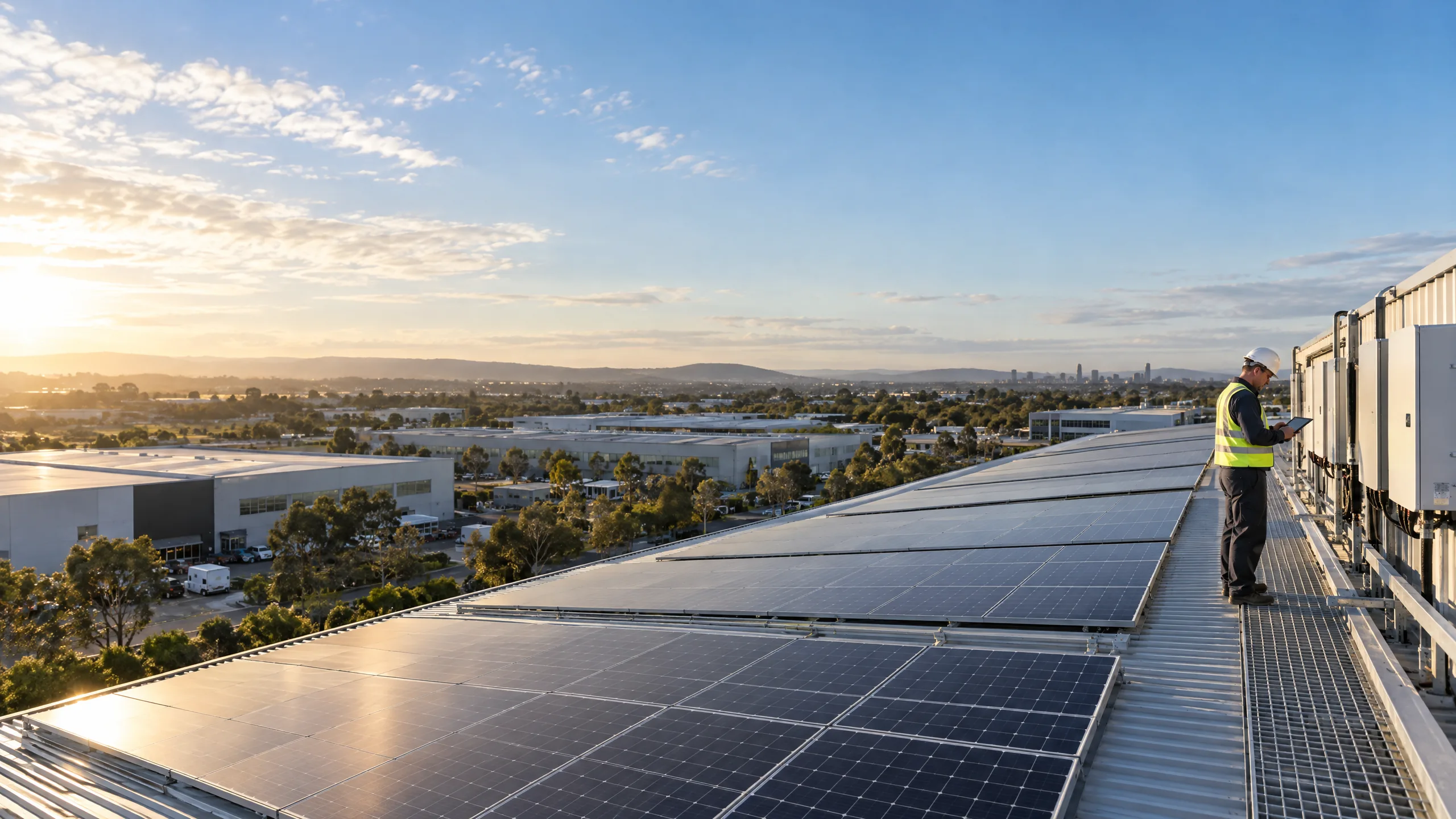
Commercial Solar for Victoria
Commercial Solar Systems for Victorian Businesses
Cut energy costs with a system designed around your usage and roof.
Many Victorian businesses pay peak and demand charges for daytime power their own roof could supply. A well-designed commercial system matches your interval data, cuts those charges, and pays for itself faster than you'd think. We handle the site survey, roof check, system design, installation by an accredited electrician, grid paperwork and monitoring app setup. Find out your payback timeline and available rebates.
Choose your suburb
Melbourne · West
- Caroline Springs 3023
Melbourne · South East
- Berwick 3806
- Cranbourne 3977
- Clyde 3978
- Narre Warren 3805
- Botanic Ridge 3977
Melbourne · North
- Craigieburn 3064
Melbourne · Inner
- Melbourne 3000
Melbourne · East
- Glen Waverley 3150
- Ferntree Gully 3156
- Croydon 3136
- Wantirna 3152
- Blackburn 3130
- Wheelers Hill 3150
Melbourne · North East
- Epping 3076
- Bundoora 3083
- Mill Park 3082
- Thomastown 3074
- Lalor 3075
- Whittlesea 3757
- Mernda 3754
Geelong area
- Highton 3216
- Torquay 3228
- Armstrong Creek 3217
- Geelong 3220
Ballarat area
- Ballarat 3350
Mornington Peninsula
- Mornington 3931
- Mount Martha 3934
- Mount Eliza 3930
Why commercial solar makes sense in Victoria
Victoria's businesses face rising network demand charges, especially during daylight hours when most offices and warehouses are running at full load. A commercial solar system sized to your actual consumption—not just peak capacity—turns that roof into a revenue asset. Warehouses around Dandenong and Footscray, office parks in the Docklands, and manufacturing sites across the outer west are well-placed for 30–100kW installations; orientation, surrounding buildings and tree shade matter, so a site survey comes first.
The payback case is strong because commercial tariffs include demand charges ($/kW per month for your highest 30-minute block each billing period) and time-of-use rates that spike between 3 and 9 p.m. Solar shifts that peak demand down immediately. Add the federal Small-scale Technology Certificates (STCs), Solar Victoria panel rebates, and—from 1 May 2026—the Cheaper Home Batteries Program incentives if you're pairing storage, and the total installed cost falls by 20–35% depending on system size and your eligibility.
⏳ Deadlines
- Cheaper Home Batteries steps down in 38 days (1 January 2027)About $252/kWh for the first 14 kWh, $151/kWh to 28 kWh and $38/kWh to 50 kWh (2026 rate) Source: DCCEEW Cheaper Home Batteries, from 1 May 2026 · checked 2026-10-16
- STC discount on new solar shrinks in 38 days (1 January 2027)about 20% less than this year (one fewer deeming year) Source: Clean Energy Regulator (small-scale technology certificates) · set by law
Local solar data
How much power does solar make in Victoria?
Each kW of panels in Victoria makes about 1,366 kWh a year (Melbourne data). That means a 6.6kW system makes around 9,016 kWh a year, or about 25 kWh on an average day. Melbourne averages 4.8 peak sun hours a day.
Figures use PVWatts modelling for a north-facing (south-facing in the northern hemisphere) roof at 20°. Your actual output depends on shade, roof direction and the panels you choose.
| City | Network | kWh per kW a year | Sun hours a day | Grid price per kWh | Yearly saving, 6.6kW |
|---|---|---|---|---|---|
| Melbourne VIC | — | 1,366 | 4.76 | — | — |
Incentives that apply in Victoria
National · battery
Cheaper Home Batteries
About $252/kWh for the first 14 kWh, $151/kWh to 28 kWh and $38/kWh to 50 kWh (2026 rate)
Battery 5–100 kWh, able to join a VPP, connected to rooftop solar
Source: DCCEEW Cheaper Home Batteries, from 1 May 2026 · checked 2026-10-16
National · solar
Small-scale Technology Certificates (STCs)
Upfront discount: kW × zone multiplier × deeming years × STC price
Systems up to 100kW installed by an SAA-accredited installer
Source: SRES: zone multiplier × 5-year deeming × $38 per STC · checked 2026-10-16
VIC · hot water
Solar Victoria hot water rebate
up to $1,400 locally made, $1,000 other
Same $150,000 income cap
Source: Solar Victoria, from 1 July 2026 · checked 2026-10-16
VIC · solar
Solar Victoria panel rebate
up to $1,400
Combined household income $150,000 or less
Source: Solar Victoria, from 1 July 2026 · checked 2026-10-16
Sources: PVWatts v8 (north-facing 20°, 14% losses, nearest station) · SRES: zone multiplier × 5-year deeming × $38 per STC · DCCEEW Cheaper Home Batteries, from 1 May 2026 · Solar Victoria, from 1 July 2026
How long does a home solar installation take?
What size solar system do I need?
Will solar work on a cloudy day?
What size commercial solar system does a Victorian business need?
How much does commercial solar cost in Victoria?
What rebates and incentives are available for commercial solar in Victoria?
Do I need an electrician's licence to install commercial solar in Victoria?
How long does a commercial solar installation take?
What is included in Bill Saver Solar's commercial solar service?
Does my Victorian business roof type affect the cost?
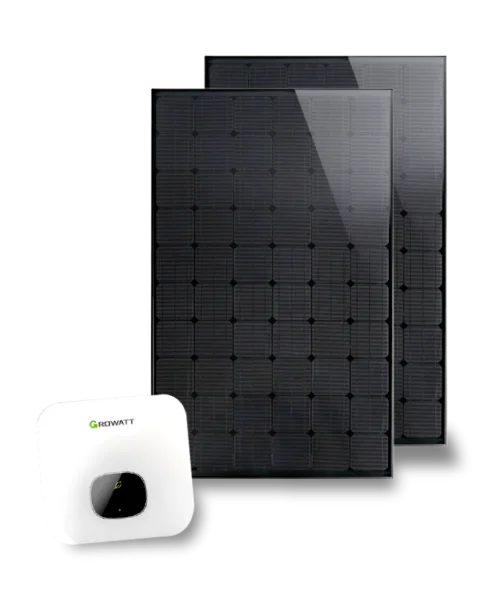
Ready to cut your energy bills?
Book a free site survey. We'll assess your roof, analyse your usage, model your payback, and explain all available rebates. No obligation.